Ad hoc Assembly
Using the full catalog of enzymes in a cloning experiment
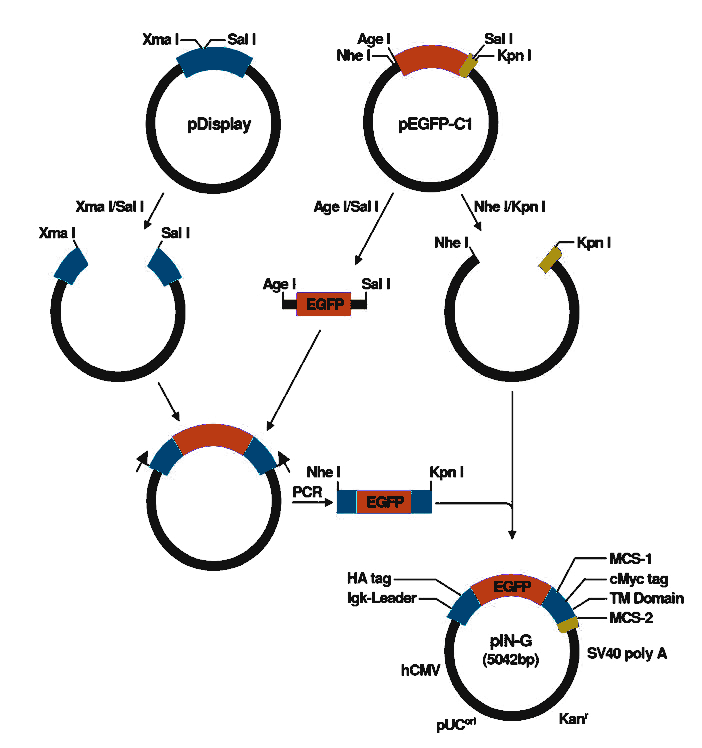
Ad hoc cloning means any non-standardized method of constructing DNAs. There are no constraints on the methodologies employed and these approaches make full use of the catalog of available enzymes and techniques to perform a cloning experiment. The other methodologies we’ll discuss correspond to standardized methods of fabrication. Though ad hoc cloning would be difficult both computationally and physically to automate, automation is not the catch-all-scenario solution to DNA manipulation. For example, various library generation methods are best implemented with ad hoc methods. Additionally, until the price of commercial DNA fabrication comes down one more order of magnitide, there will still be some motivation to use these methods in the wetlab in contexts where the change to a sequence is fairly simple. Section divider: Ad hoc Assembly. Using the full catalog of enzymes in a cloning experiment.