Setting up PCR

LabSheets

Step-by-step instructions you bring into the lab, videos explain how to interpret each one
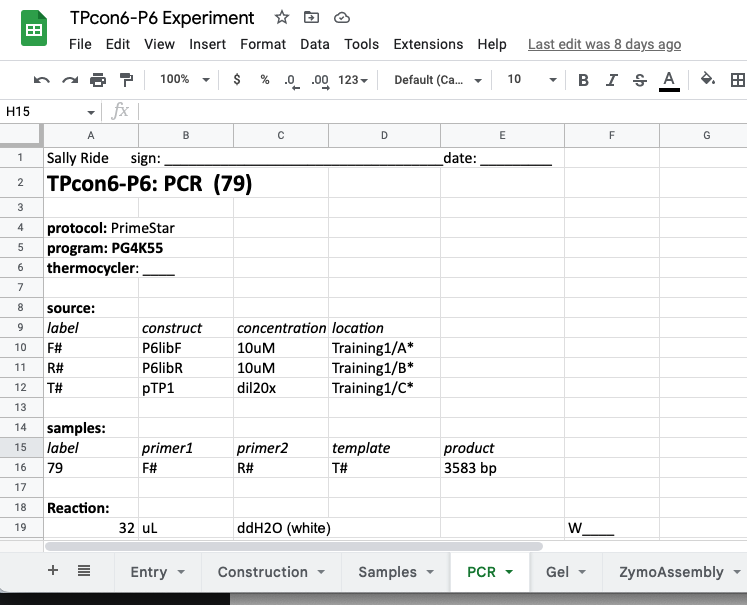
A Google Sheets window titled TPcon6-P6 Experiment. The open tab is PCR. It carries a signature and date line, the heading TPcon6-P6: PCR (79), then protocol PrimeStar, program PG4K55 and a blank for the thermocycler. A source table lists three items with their construct, concentration and location: F# is P6libF at 10uM in Training1/A, R# is P6libR at 10uM in Training1/B, T# is pTP1 at dil20x in Training1/C. A samples table gives sample 79 as primer1 F#, primer2 R#, template T#, product 3583 bp. The reaction begins 32 uL ddH2O. Tabs along the bottom read Entry, Construction, Samples, PCR, Gel, ZymoAssembly.

Resuspend and dilute oligos

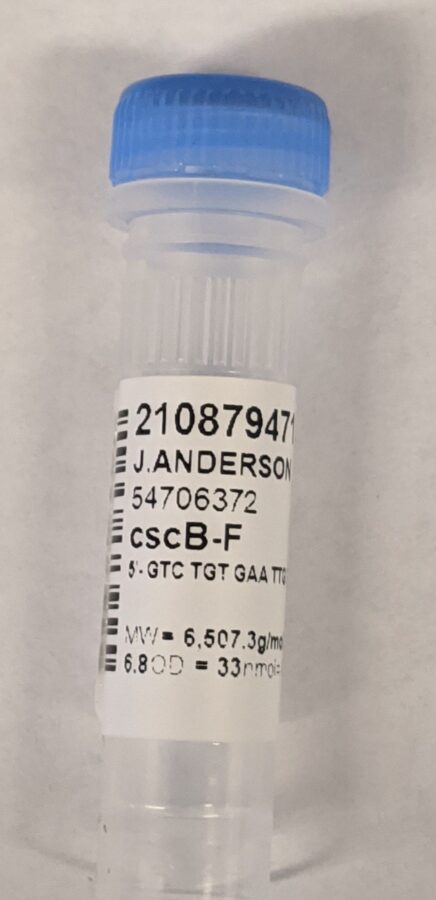
A small screw-cap tube with a blue lid standing upright, its printed label reading 21087941, J ANDERSON, 54706372, cscB-F, with a sequence and a yield in nanomoles beneath. The tube looks empty.
Lyophilized Oligos
from IDT
Spin
Add ddH2O
Shake
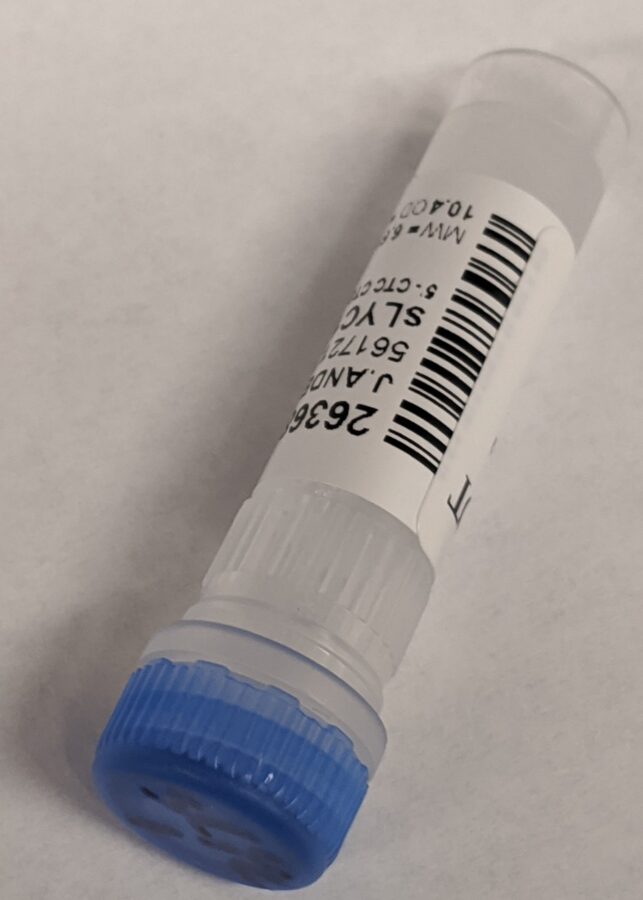
The same kind of blue-capped tube, now standing cap downwards in a rack, with a barcoded label wrapped round it. It holds a clear liquid.
100uM Stock
5 uL stock +
45 uL ddH2O
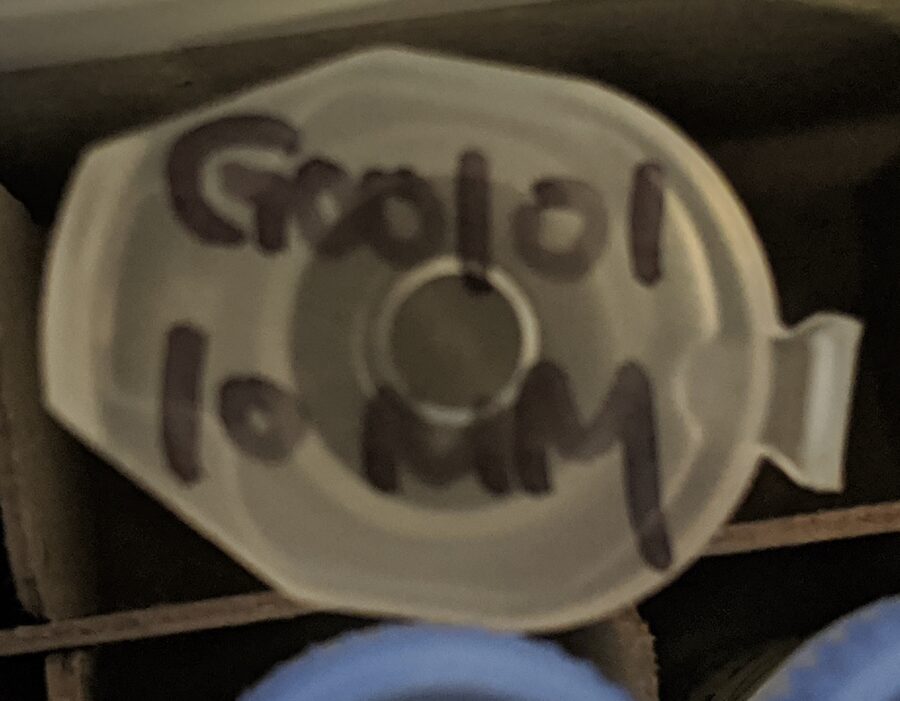
Looking down on the hinged flat cap of a 1.5 millilitre Eppendorf tube sitting in a dark rack, with GoO1o1 and 10 uM written across it in marker pen.
10uM Stock
1.5 mL Eppendorf
pP6 begins here
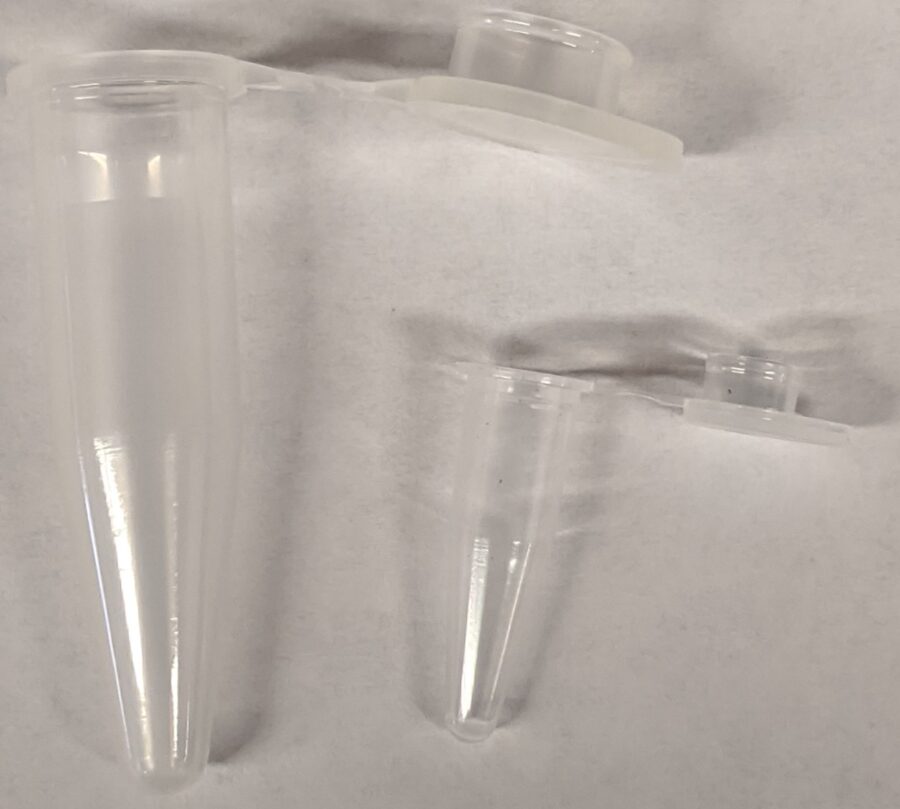
Two open tubes side by side on a white bench. The left one is a 1.5 millilitre Eppendorf, taller and in noticeably thicker plastic, with a hinged flat cap. The right one is a PCR tube, smaller, thinner-walled and more sharply tapered.
1.5 mL Eppendorf
PCR Tube

Location of all enzymes and buffers

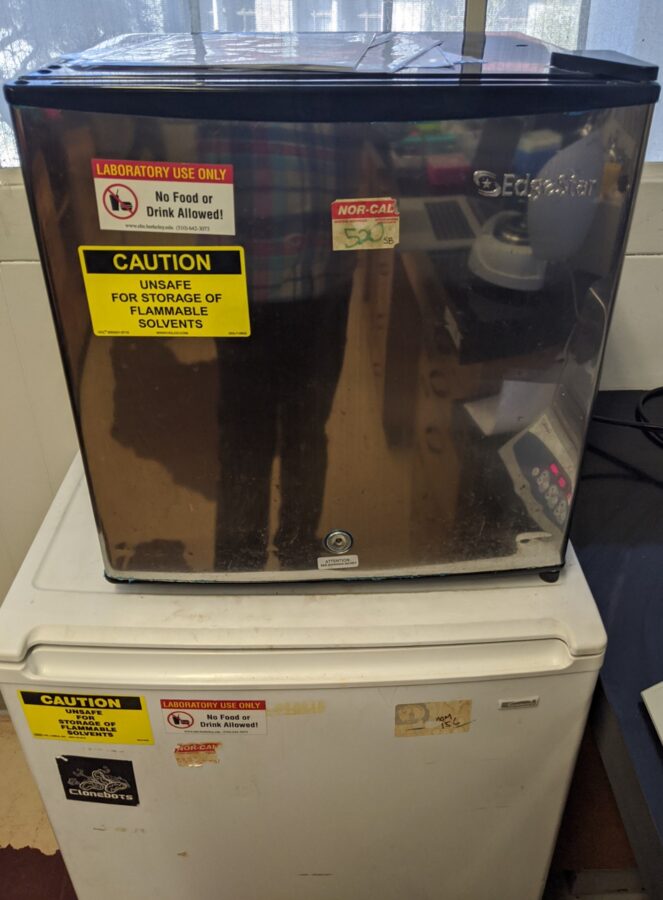
A small chest-height laboratory freezer standing closed on top of a white under-counter fridge, with hazard stickers reading laboratory use only, no food or drink allowed, and unsafe for storage of flammable solvents.
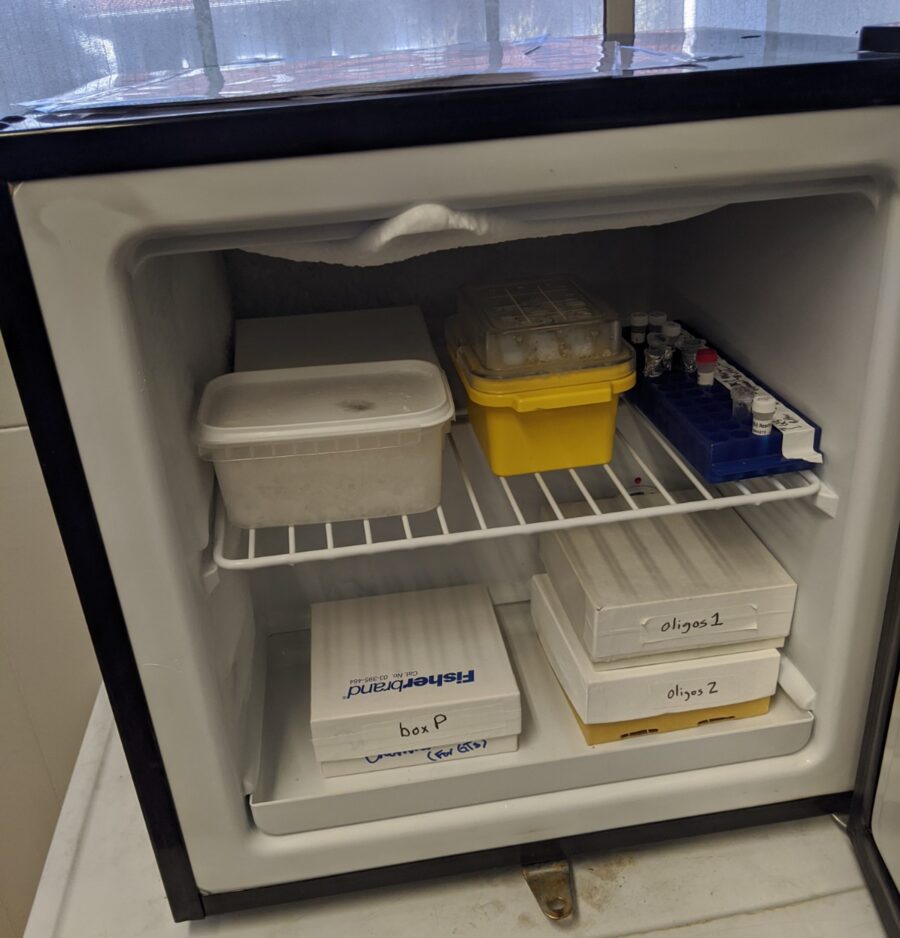
The same freezer with its door open. A wire shelf carries several white cardboard cryo boxes, a yellow enzyme cooler and a blue rack.
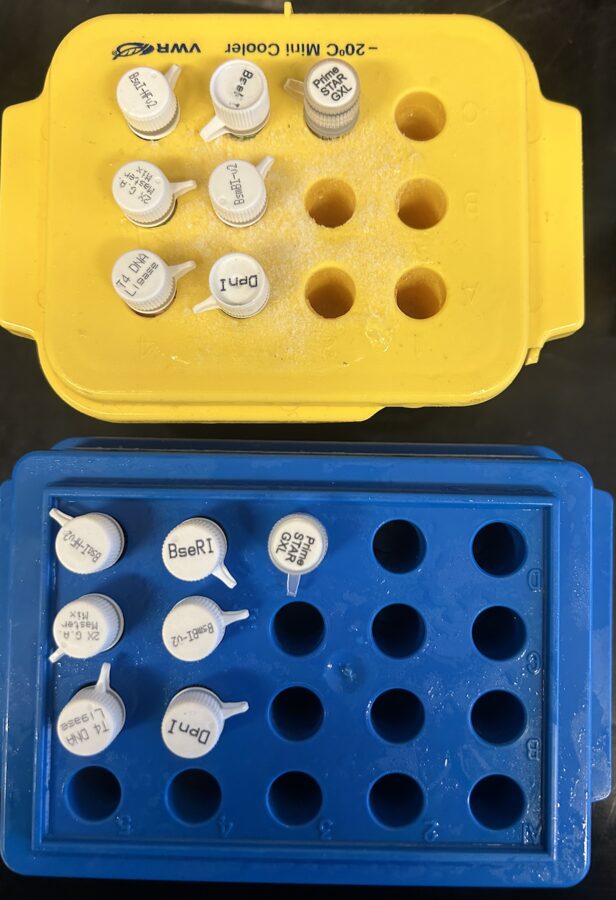
Two moulded benchtop coolers photographed from above, a yellow minus twenty degree one and a blue one, their wells holding small screw-cap tubes labelled in marker with enzyme names including BamHI, DpnI and T4.
All Enzymes
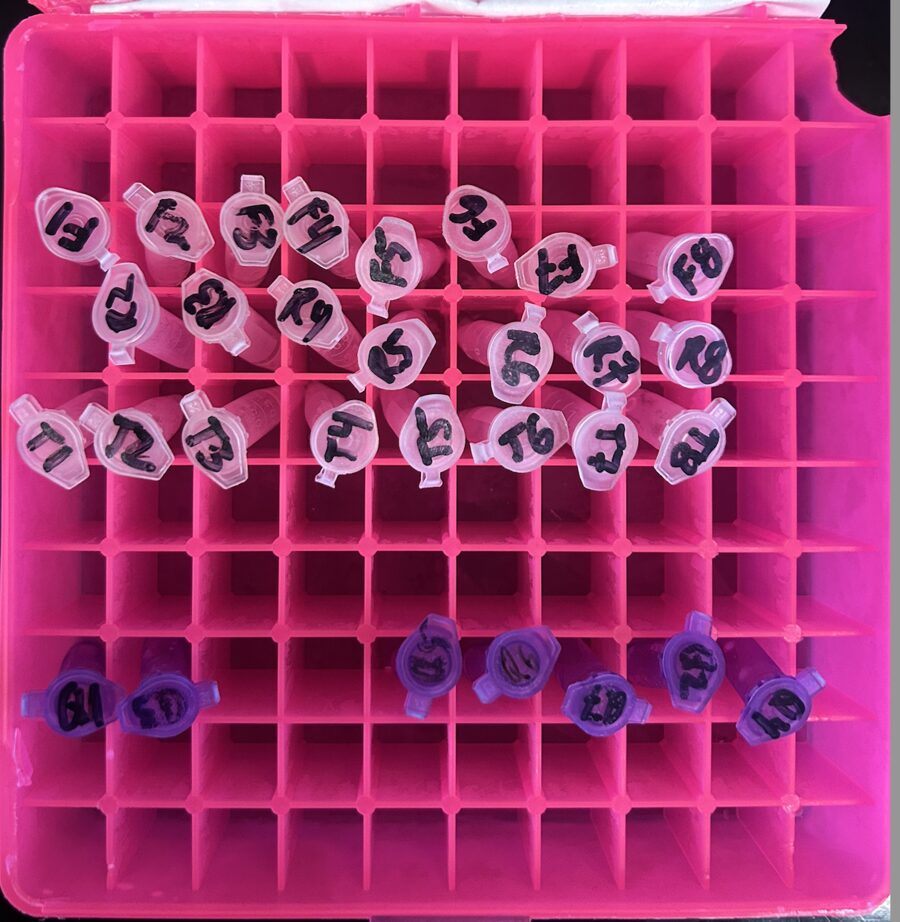
A pink hundred-well storage box seen from above, about half filled with small tubes, each cap numbered in marker pen.
Oligos, templates
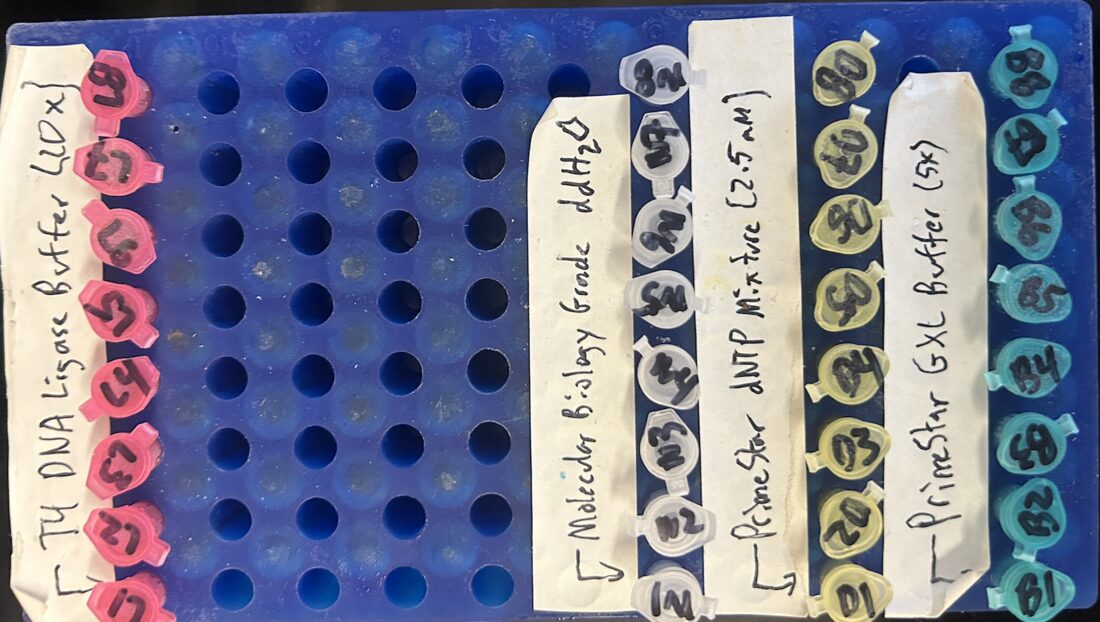
A blue hundred-well storage box seen from above, with handwritten paper labels standing in the rows: T4 DNA Ligase Buffer 10x, Molecular Biology Grade ddH2O, PrimeStar dNTP Mixture 2.5 mM, PrimeStar GXL Buffer 5x. Each label heads a column of numbered aliquot tubes.
All Buffers, dNTPs, etc.

Set up a single PCR reaction

ddH2O

Buffer

dNTPs

Oligo1 (10 uM)

Oligo2 (10 uM)

Template (dil20x)
1-6
7
Polymerase
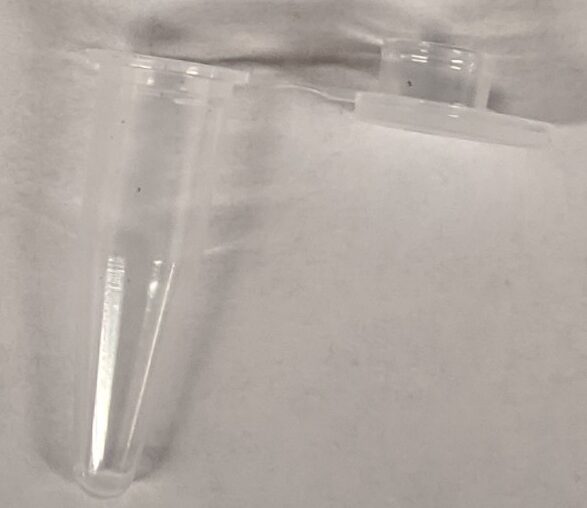
A single empty PCR tube standing on a white bench, its flat cap open and folded back.
PCR Tube

Run the thermocycler

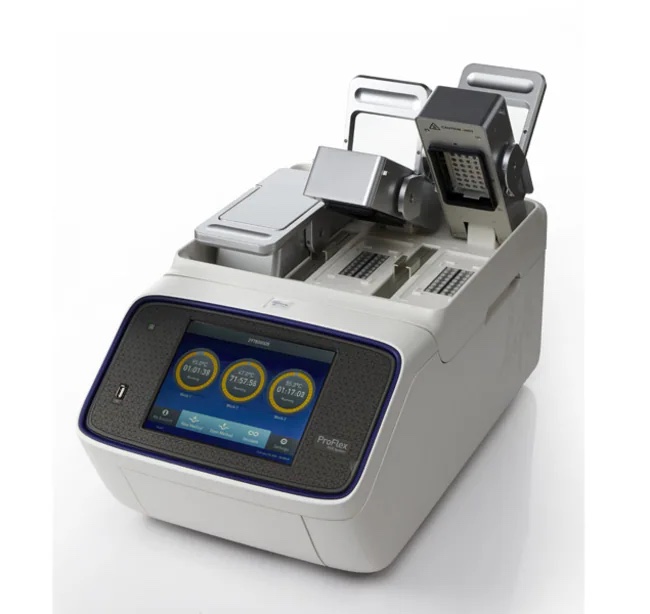
A ProFlex 3x32-Well PCR System on a bench. Two of its three lids are raised over 32-well blocks; the touchscreen below shows each block running its own program and its own countdown.

The LabSheet will tell you which polymerase and which program to run
Buffer and Polymerase Kits

PrimeSTAR GXL

  • High Fidelity
  • Extremely reliable
  • Good on genomic DNA
  • Use up to 30+ kb
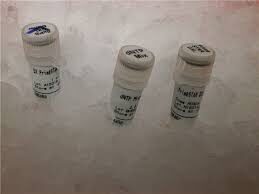
Three small white-capped kit vials lying on a pale bench, their printed labels turned mostly away from the camera.

PCR Protocol (printed out in lab)

Set up a PrimeSTAR PCR (2-40 kb)

Set up the following reaction in a PCR tube, in the following order:

32 uL ddH20
10 uL 5X PrimeSTAR GXL Buffer
4 uL dNTP Mixture (2.5 mM each)
1 uL 10uM primer 1
1 uL 10uM primer 2
1 uL dil20x plasmid template
1 uL PrimeSTAR GXL DNA Polymerase
  1. Slam on the benchtop to mix thoroughly
  2. Give a quick spin to knock all the liquid to the bottom of the tube
  3. Run the appropriate PCR program from your worksheet
A blue and turquoise batik print of stylised four-petalled flowers in a grid of squares, with the words 4 hours later, followed by an ellipsis, lettered across the middle of it in white.

(or later)