A closer look at pTargetF
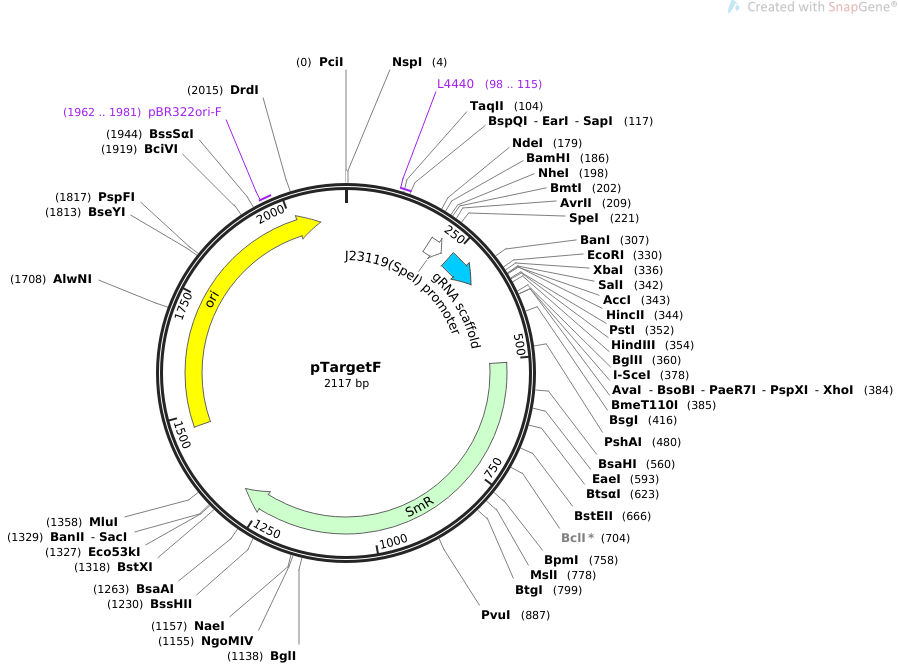
Forward primer
         SpeI       protospacer         guide scaffold
5’-ccataACTAGTacgctgcctgagtctctgtagttttagagctagaaatagcaag-3’

Reverse primer
         SpeI       J23119
5’-ctcagACTAGTattatacctaggactgagctag-3’
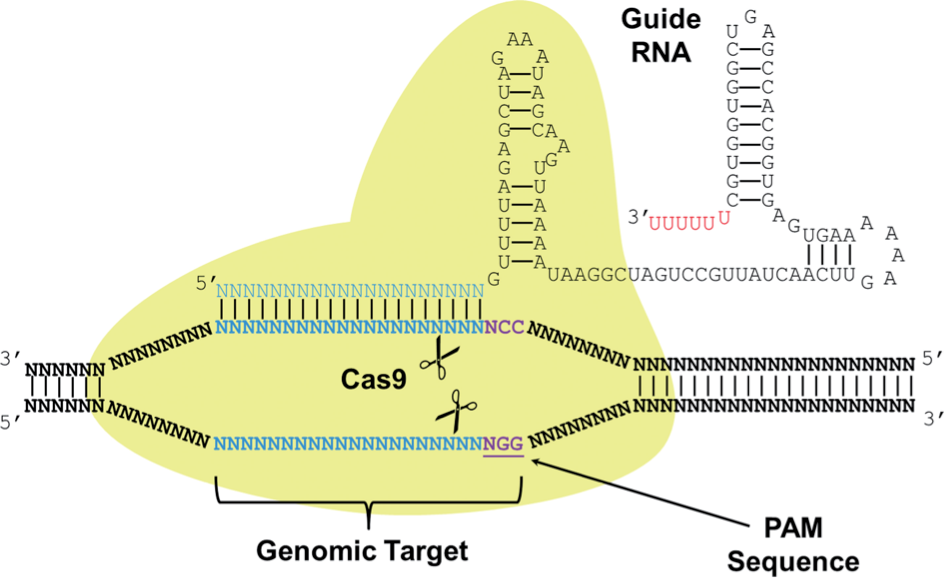
Only the red changes. Everything else is the same in every guide you will ever order.
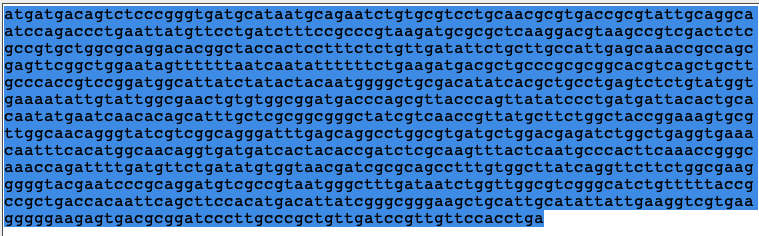
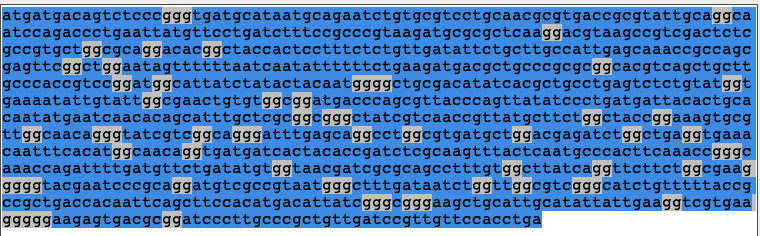
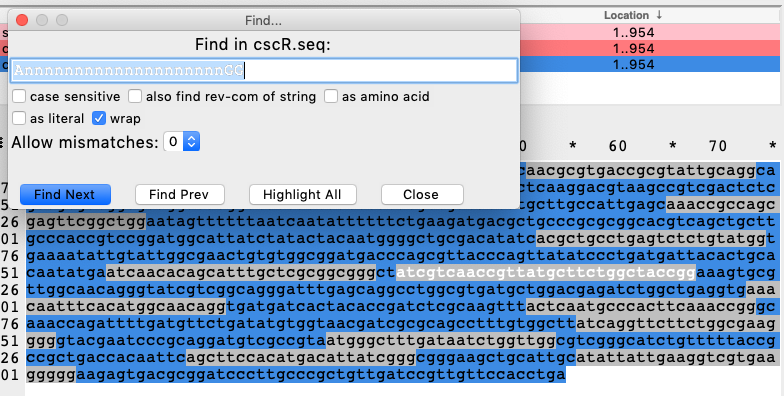
These two oligos are then used with pTargetF in an EIPCR, closing the circle with SpeI. The sequence in red is the chosen region in cscR. You can search for it in the file and see that it is adjacent to NGG and begins with an A. The two oligos for building a guide, set as text: a forward primer made of a five-base tail, a SpeI site, the twenty-base protospacer in red and the guide scaffold, and a reverse primer made of a tail, a SpeI site and the J23119 promoter. A note underneath says only the protospacer changes.PCR ca4238 ca4239 pTargetF ipcr Digest ipcr SpeI 1 dig Ligate dig lig Transform lig Mach1 Spec 37 pTarg-cscRIt is an EIPCR like any other: amplify the whole plasmid with the change built into the primer tails, cut the tails, and close the circle. The construction file for building the guide plasmid: PCR pTargetF with the two oligos, digest the product with SpeI, ligate it closed, and transform into Mach1 on spectinomycin at 37 degrees to give pTarg-cscR.
Design the oligos for an EIPCR with SpeI on pTargetF to make a guide that will target fimA for cleavage
Forward primer
         SpeI       protospacer         guide scaffold
5’-ccataACTAGTacgctgcctgagtctctgtagttttagagctagaaatagcaag-3’

Reverse primer
         SpeI       J23119
5’-ctcagACTAGTattatacctaggactgagctag-3’
pTargetF’s original protospacer, for you to replace
Search AnnnnnnnnnnnnnnnnnnnnGG in fimA. One hit is AAACGTTGGTGTGCAGATCCTGG — the first twenty bases are the spacer, and the TGG after them is the PAM, which stays in the genome and never goes in the oligo.
Forward primer
         SpeI       protospacer         guide scaffold
5’-ccataACTAGTAAACGTTGGTGTGCAGATCCgttttagagctagaaatagcaag-3’

Reverse primer
         SpeI       J23119
5’-ctcagACTAGTattatacctaggactgagctag-3’
The reverse primer never changes.