The rest of this is the bench work for the week, and it picks up where the fabrication lecture left off. You have DNA; now you have to get it into cells.
Section divider: Transformation and Plating.
Where the plates come from
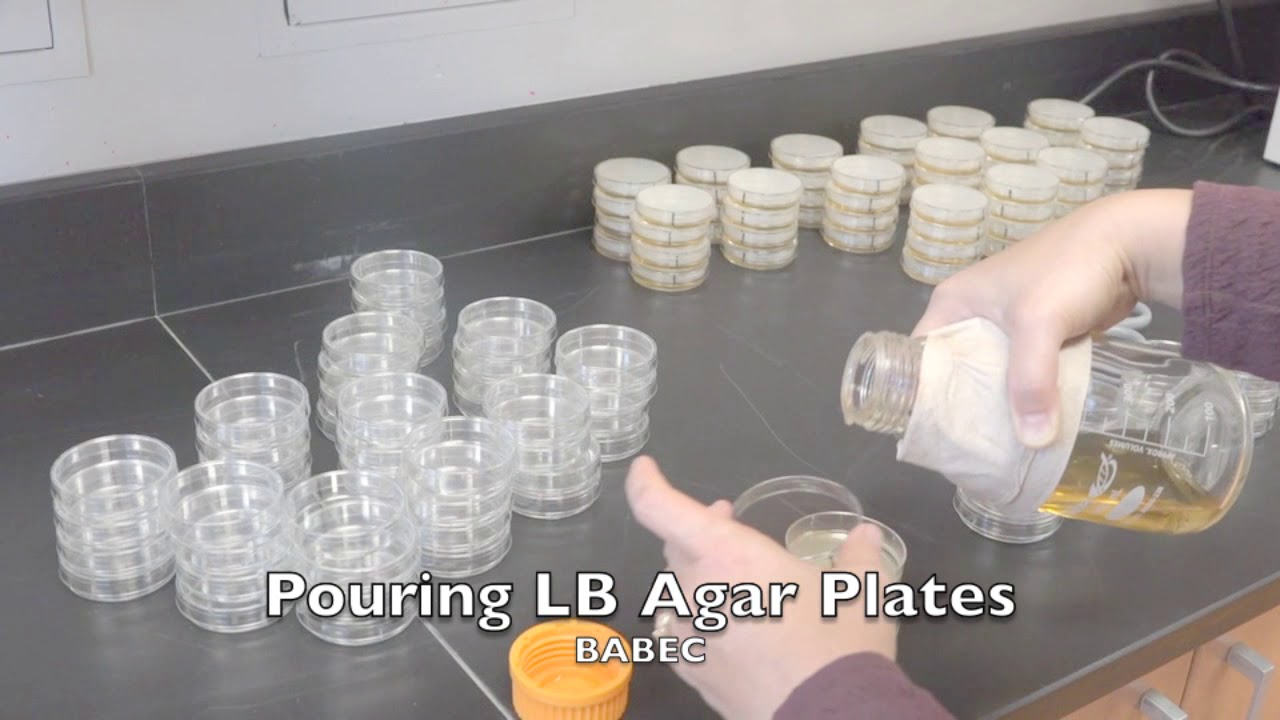
Plates do not arrive from anywhere, somebody makes them. LB agar is a powder: a level tablespoon into a 250 millilitre bottle, fill it with DI water, shake to knock the powder off the bottom, and sterilise it immediately, because hydrated agar is not sterile and will grow something quite happily if you leave it on the bench. Twenty minutes at pressure in the cooker, then swirl it while it is still hot so it disperses and the bottom runs clear. Then you wait, because antibiotic goes in at about fifty-five degrees and not before: too hot and you destroy the drug, too cold and the agar sets in the bottle. The practical test is whether you can hold the bottle without it hurting. Every antibiotic stock in this lab is a thousand times, so it is one microlitre per millilitre of agar. Then pour, about twenty-five millilitres a plate, which is roughly ten plates from a bottle and about three sixteenths of an inch deep. That happens in the chemical hood over a lit Bunsen, because the hood has the only gas line, and the flame is not sterilising anything: the column of hot air rising off it stops dust and airborne spores settling into open plates. If bubbles form, pass the flame across the surface and they pop. Lids back on and let them set. The flame makes this supervisor work, so you will be asking for plates rather than pouring them, but it is worth knowing what you are being handed and why it has stripes on the side.
A photograph of LB agar being poured from a 250 millilitre bottle into a petri dish, with stacks of empty dishes waiting on the bench and poured plates stacked behind.
KCM heat-shock transformation
The timeline across the top is the one from the bench cheatsheet. Watch where the red mark is as much as what is happening underneath it. Three things it says that a numbered list does not: the plates go in first because they are the only slow item and everything else waits on them; the ninety second heat shock is the shortest box on the row and the only one that matters, sitting between two holds that are ten times longer; and the rescue hangs underneath rather than sitting in the line, because it is a condition and not a step.
KCM heat-shock transformation run step by step, with the bench cheatsheet's timeline across the top and the current step picked out on it in red.
Then leave it overnight
Plate, invert, 37 degrees, and that is the day. Nothing you can do now changes what comes up.
A picture of a crescent moon, standing for the overnight incubation.