Whole-Cell Analysis
YouTube playlist:
youtube.com/watch?v=plOc9Ei5nvY&list=PL2aPXzks-TgMo_x6XhYmfoZDezm4m-DcL
YouTube playlist:
youtube.com/watch?v=plOc9Ei5nvY&list=PL2aPXzks-TgMo_x6XhYmfoZDezm4m-DcL
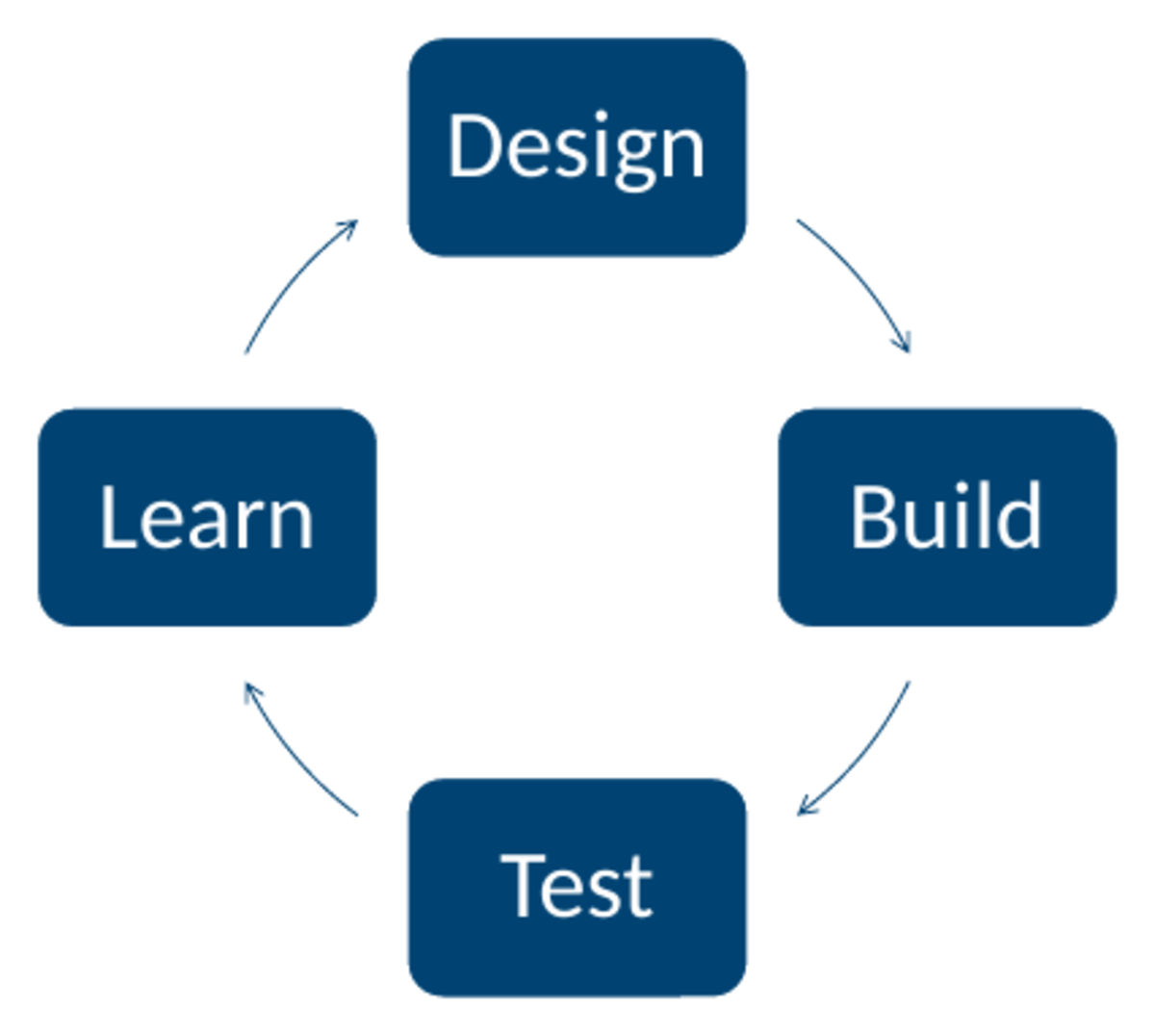
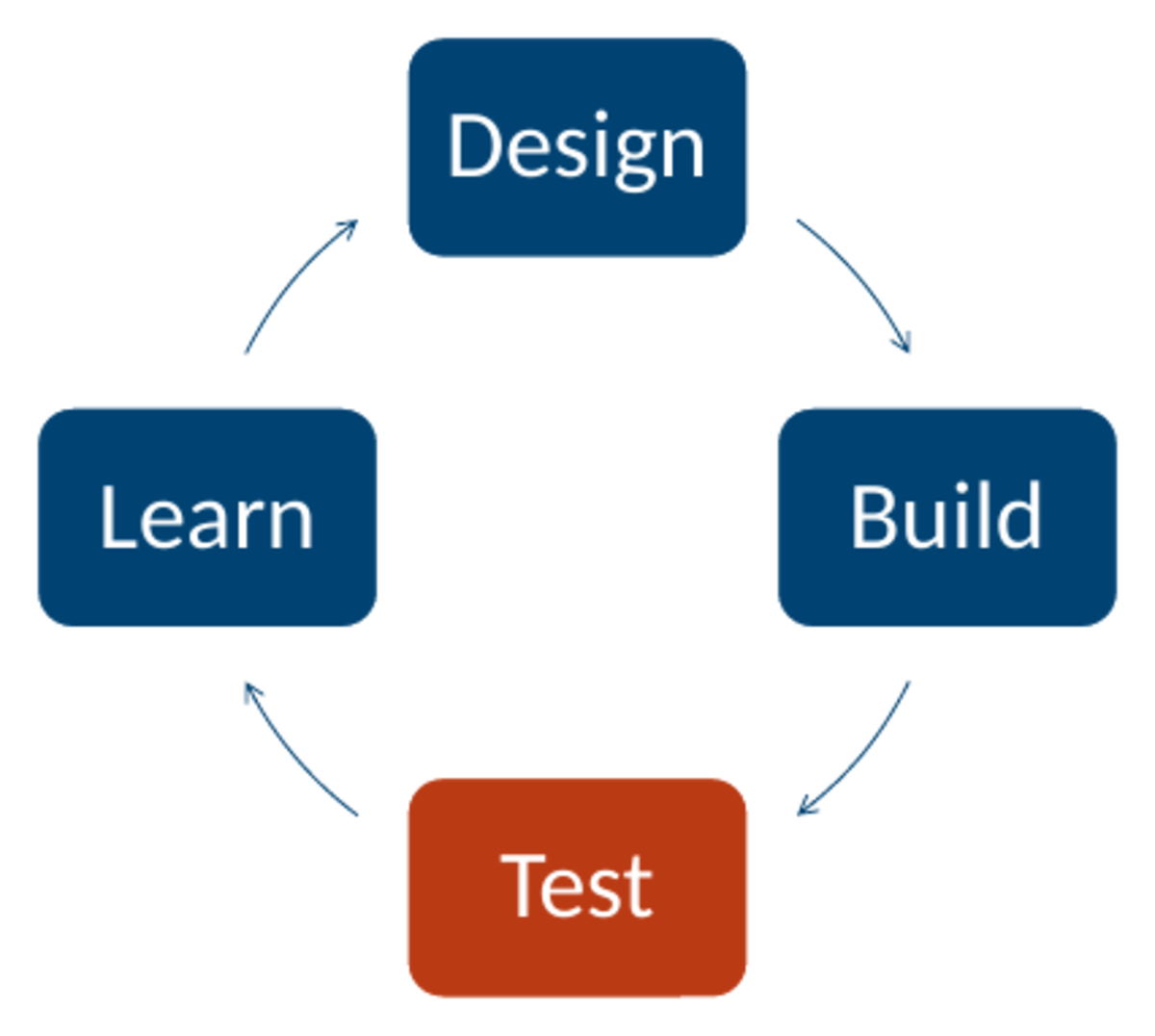
Brainbow 3.1: Cai et al., Nat Methods 2013, PMID 23817127
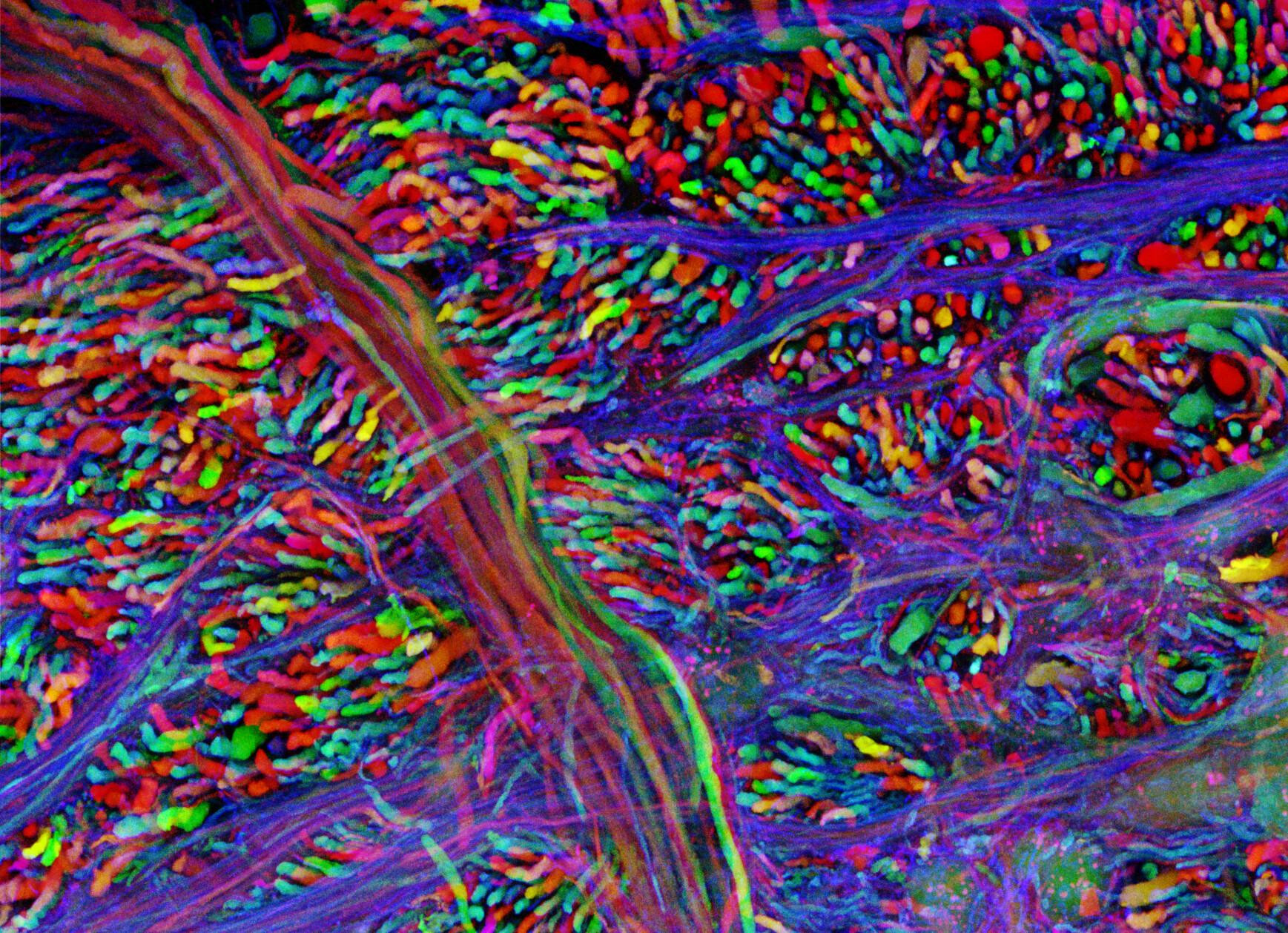
Jean Livet, Lichtman lab. First Prize, 2007 Olympus BioScapes. Cell Image Library CIL:40984, CC BY-NC-ND
Demonstrations are also common in the genetic engineering space. Often they employ beautiful images and videos to entice the reader’s attention. In this example, we are looking at a false-color rendering of the Brainbow. The Brainbow was a genetic circuit composed of three fluorescent proteins randomly expressed at several distinct expression levels. A transgenic animal encodes the device, and each neuron of its brain will express one combination of the fluorescent proteins at specific levels. Each neuron then has a unique signature relative to its neighbors in terms of the relative fluorescence on the three channels. When they do microscopy on slices of the brain material, they can quantify each channel, determine which combination of levels are present in each cell, and assign a color specific to that combination. They then false-color the image to generate what is shown here. The Brainbow: a prize-winning micrograph of a Brainbow mouse brainstem, packed with axons that each glow their own hue — red, orange, yellow, green, cyan — so every neuron can be told apart from its neighbors.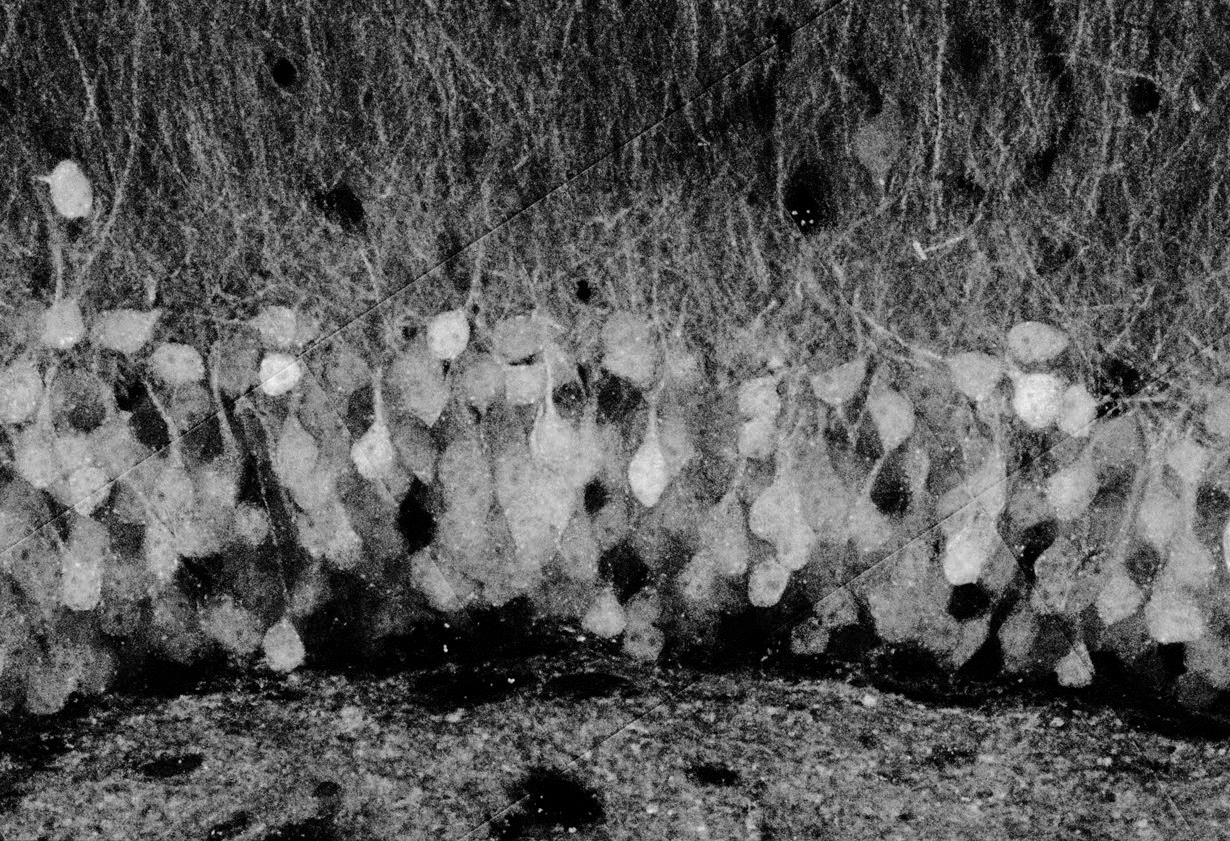
Jean Livet, Lichtman lab. Honorable Mention, 2007 Olympus BioScapes. Cell Image Library CIL:42753, CC BY-NC-ND
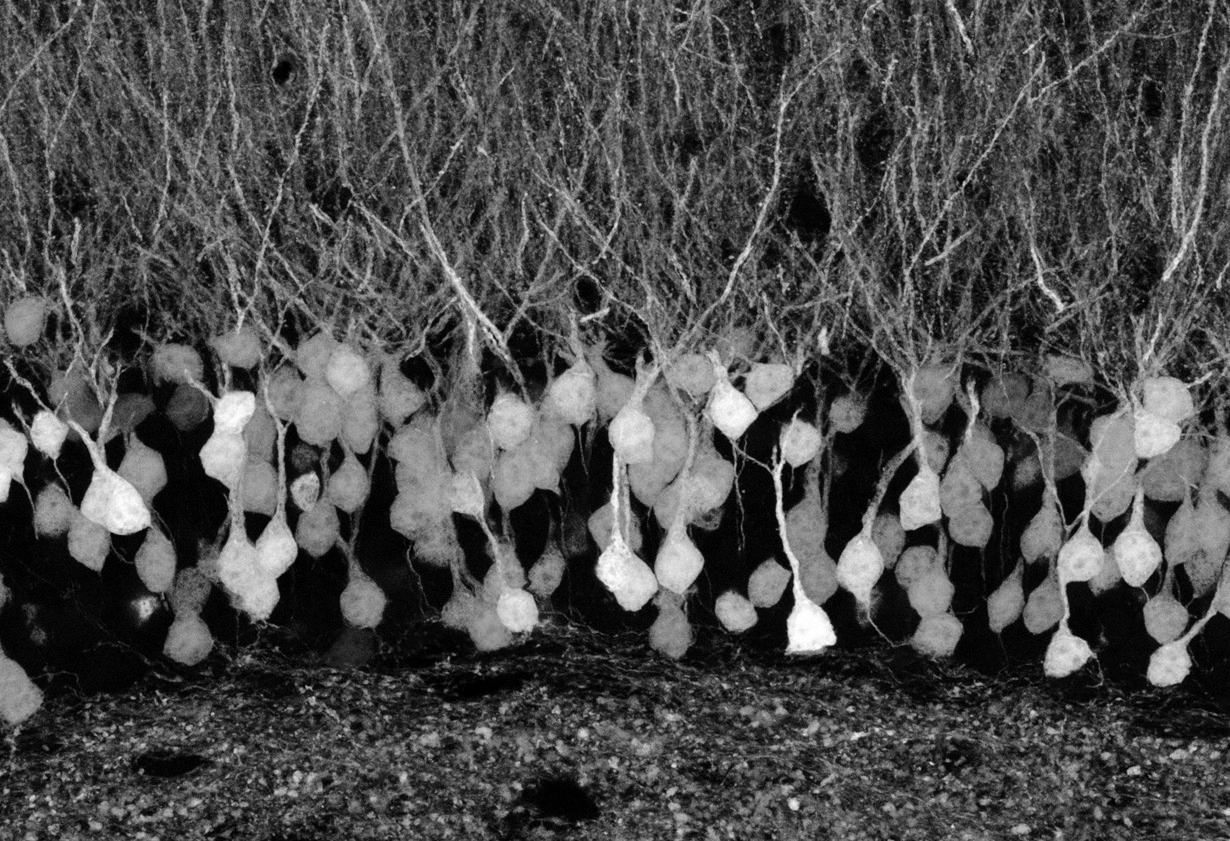
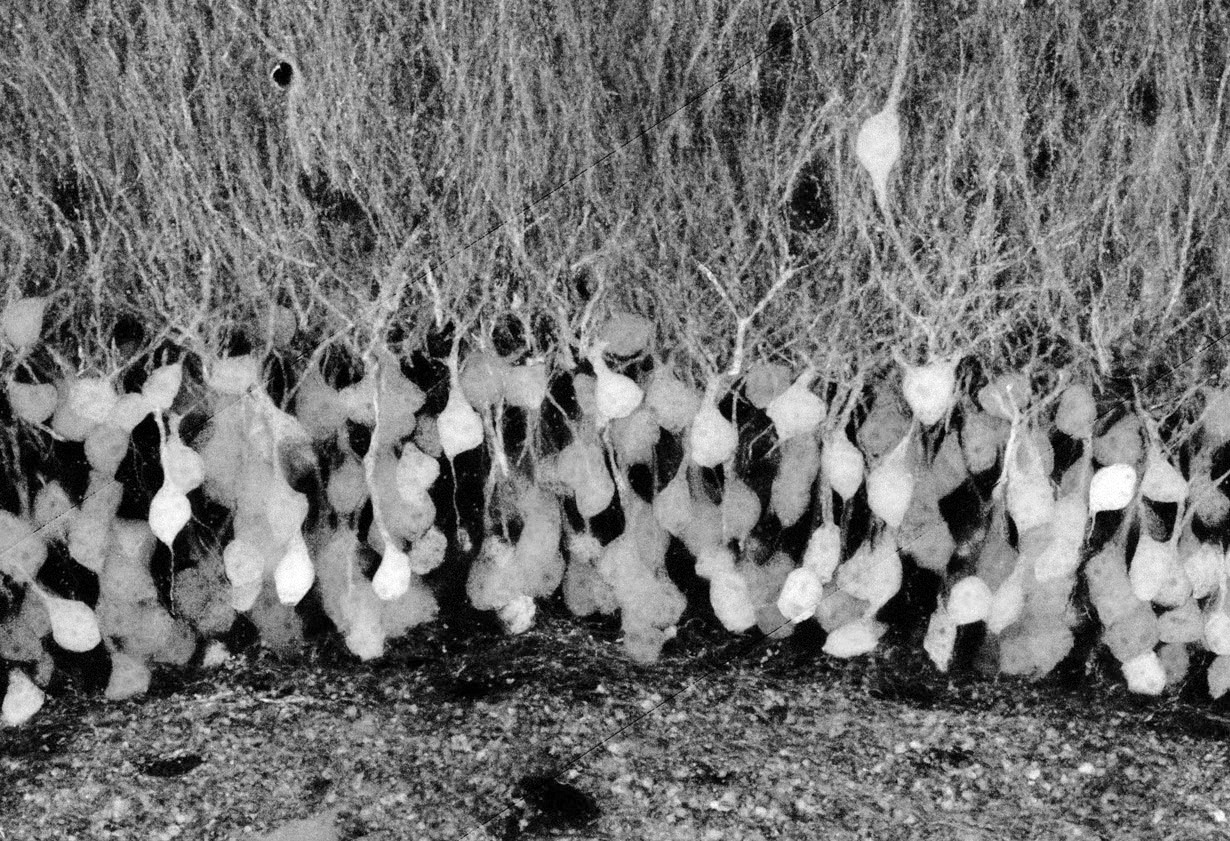
In reality, what the scientists probably saw under a microscope looked something like this. And they could have published that image, and the technical merit and utility of the technique is in no way compromised. They could have provided graphs showing statistics about how well they can distinguish two cells, or other more technical measures of performance. However, without the false coloring the ability to distinguish the neurons is not communicated, and the utility of the technique would be lost. It might be understandable to software, but this ability is not communicated without the false-color contrivance. Additionally, the technique is simply not as tantalizing and interesting as when they produce the beautiful image. One field of Brainbow hippocampus as the microscope records it: the three fluorescence channels side by side in greyscale, each a band of densely packed pyramidal cells. In any one channel, one neuron cannot readily be told from the next.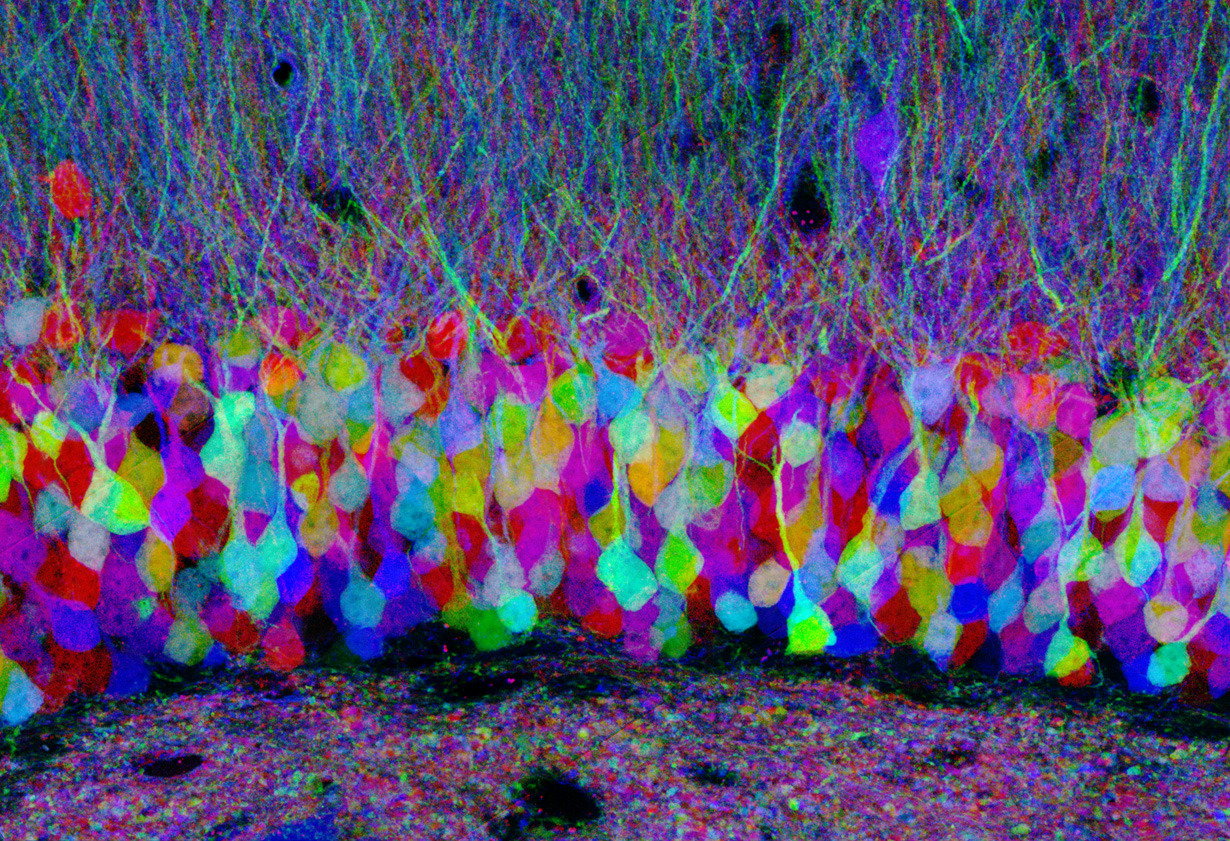
The same three channels, merged as red, green and blue. Jean Livet, Lichtman lab. Honorable Mention, 2007 Olympus BioScapes. Cell Image Library CIL:42753, CC BY-NC-ND
The colorful version communicates to the reader not only that this labeling method allows the tracking of individual cells, but you also get an impression for how well this methodology can distinguish the axons of one cell from another. The same field again, its three channels merged as red, green and blue so that every neuron takes its own color. Nothing has been added to the data since the previous slide; only the rendering has changed, and only now can the cells be told apart.or…
or…
or…
or…
…about four months later
Xiao et al., Cell Stem Cell 2018
Here’s another example. Suppose you want a gene therapy for diabetes. In one real study, Xiao and colleagues packaged two genes, Pdx1 and MafA, in a virus and infused it into the pancreas of diabetic mice, where it turned the mice’s own alpha cells into insulin-making cells. The technical experiment would involve identifying a mouse diabetes model, performing the treatment with the gene therapy, and then quantifying insulin levels in treated and untreated mice. The technical test of a gene therapy for diabetes, listed as three steps: find a mouse diabetes model, treat it with the gene therapy, and compare insulin levels in treated and untreated mice.| Investors | it pays | Practices: Does it pay? |
|---|---|---|
| Regulators | it is safe | Practices: Is it safe? Who says so? |
| The people who live with it | they want it here | Practices: Who else gets a say? |
The audience picks the demonstration. Some of the best ones are barely technical: an axe, a car, a flame.
When developing a new technology, it will always be valuable to think about what experiments would make good demonstrations. There will always be additional, more technical experiments that you need to perform to show that specific attributes of your system work as intended, but this is no substitute for the demonstration. You should ask yourself, What is the closest experiment you can get to the “real world” use of this organism? What demonstration experiments are necessary to show that “unwanted” behavior is absent in the system? Is there any interesting in a sensory way (visual, smell, audible, etc.) that will illustrate the functioning of the system? Three questions to ask when designing a demonstration: what is the closest experiment to the real-world use of the organism; what demonstrations show that unwanted behavior is absent; and is there anything sensory — visual, smell, audible — that will illustrate the system working.An engineered soil bacterium lets corn grow with less nitrogen fertilizer.
You get to run one demonstration experiment before asking someone to adopt, approve, fund or accept it.
It is 2026. Who is your audience, what do they need to believe, and what would you show them?
Before you design anything, tell me who you are trying to convince. Then I want an actual experiment out of you, not a category. For the farmer, strip trials. Same field, same planting date, treated and untreated strips alternating across it, four or five repeats so a wet corner does not fool you. Harvest with the farmer’s own combine and weigh it. Then run it again at the nitrogen rate they normally buy and at half that rate, because what you are selling is “you can cut your fertilizer”, not “you get more corn”. One season on one farm is a story. Twenty farms over two states is a product. For the regulator, mark the strain so you can find it again. Sample soil on a grid running out from the plot, at the end of the season and again the next spring, and look for your marker by plating or by qPCR. Sample the root zone of whatever is planted next. What they want out of you is a distance, a time, and whether anything else picked up the gene. For the food company, take grain from the treated plots and look for the organism and its protein in the kernel. If it is not there, say how hard you looked. “Not detected at one cell per gram” is a claim. “We did not see any” is not. For the investor, cost per acre against the fertilizer it replaces at today’s urea price, and how many acres you have to treat before the plant pays for itself. For the neighbors, test their well water for nitrate before and after, and hand them the numbers whichever way they come out. Now, you only get one. I would run the strip trial, on a farm the other farmers already watch, because it is the only one on that list that makes a believer out of somebody who is not you. Question to ponder, on the amber ground. An engineered soil bacterium lets corn grow with less nitrogen fertilizer. You get to run one demonstration experiment before asking someone to adopt, approve, fund or accept it. It is 2026: who is your audience, what do they need to believe, and what would you show them?