All-Hands

Plib

Wetlab project plan

  1. Make a reporter plasmid to screen and test new terminator parts (pTP2, done)
  2. Screen a library of terminators derived from phages and identify the best ones (Tlib2, done-ish)
  3. pP6Screen libraries of UBER strength promoters to identify new ones (pP6, your first experiment)
  4. BestPCompare the activity of pP6 hits to quantitatively determine the best ones
  5. TPjoinJoin the best UBER promoters and terminators to make the UBER parent to a new TPcon6 family
  6. PlibDiversify the -35 and -10 regions to identify a family of mutants
  7. Apply the new family to a promoter scan of the current lycopene plasmid

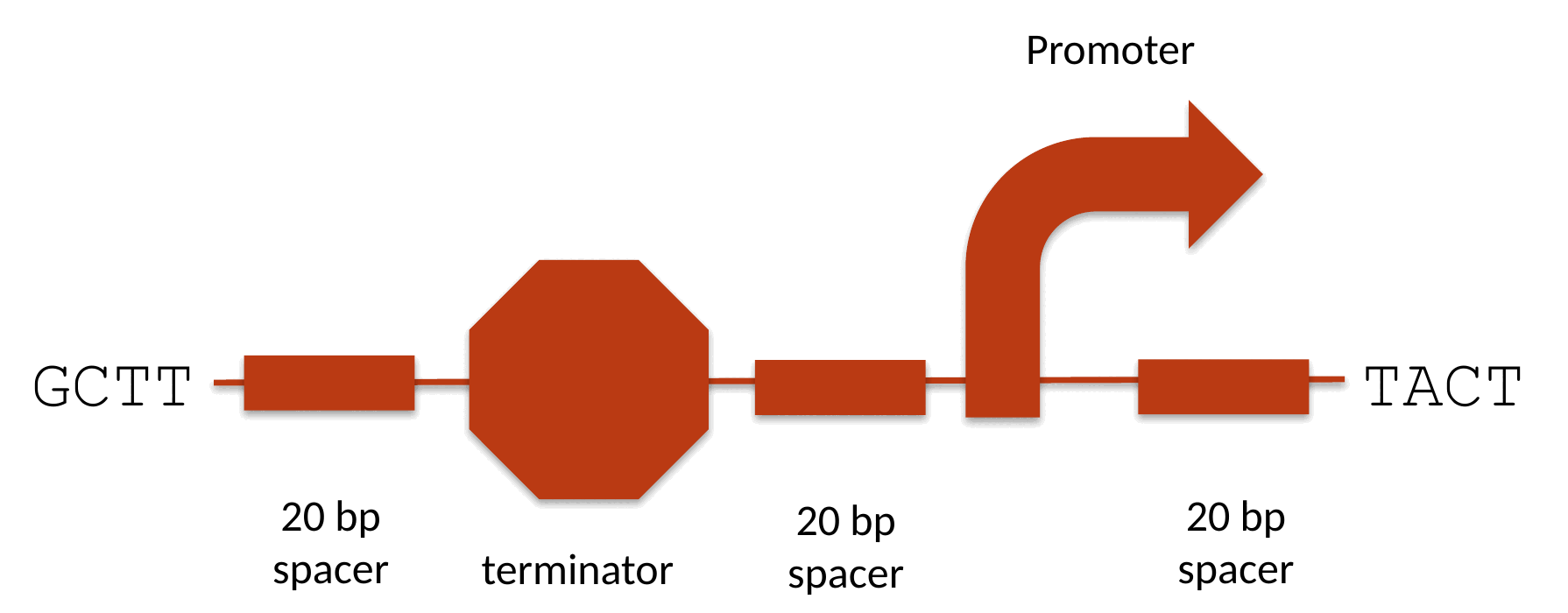
TPcon6 architecture

A cassette drawn left to right: a GCTT overhang, a 20 bp spacer, an octagon marking the terminator, a second 20 bp spacer, a bent arrow marking the promoter, a third 20 bp spacer, and a TACT overhang.

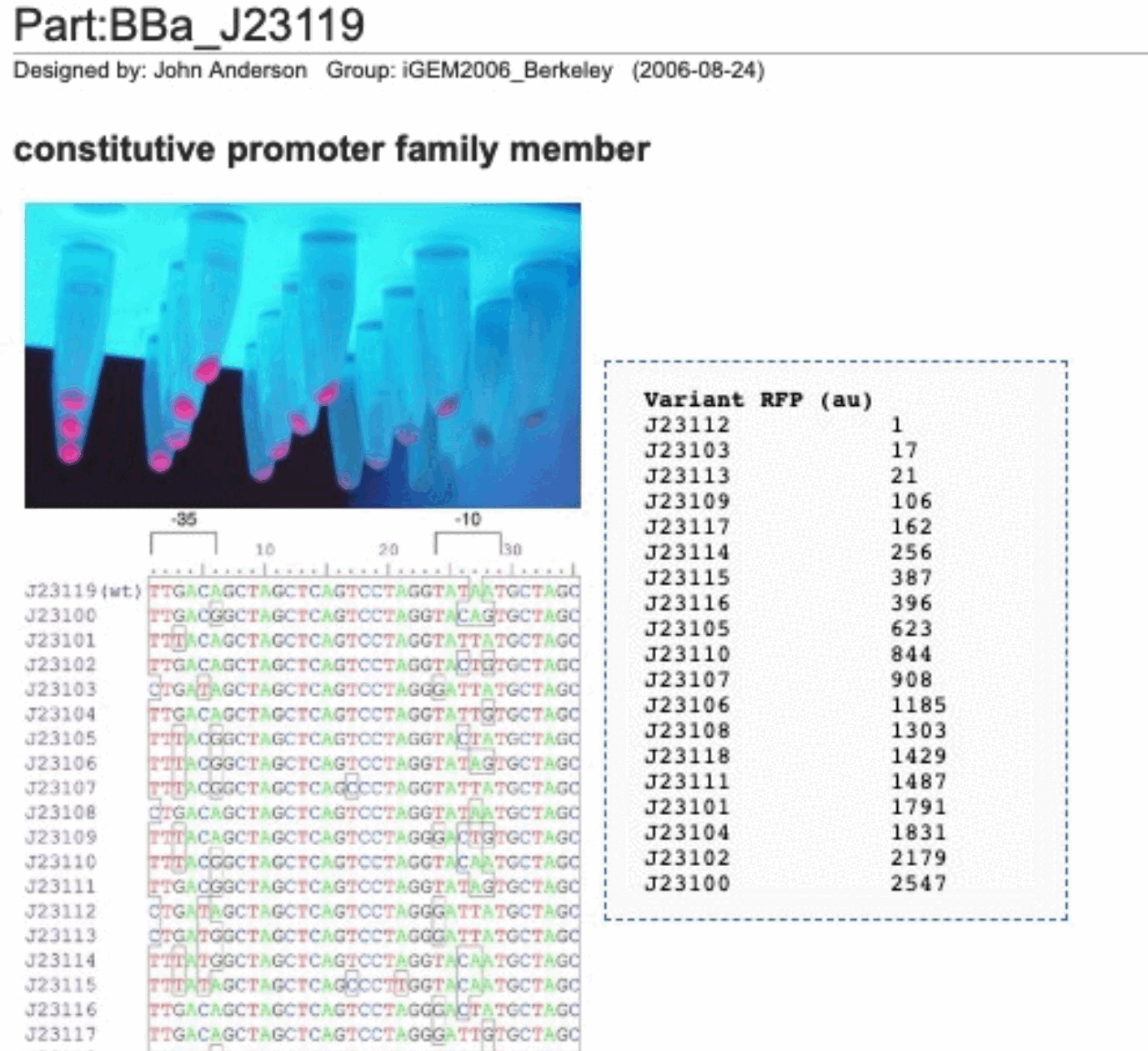
Promoter libraries

The registry page for Part BBa_J23119, a constitutive promoter family member: a photograph of culture tubes fluorescing at different brightnesses, an alignment of the family members with their -35 and -10 regions marked, and a table of variant RFP values running from 1 up to 2547.

Plib diversity

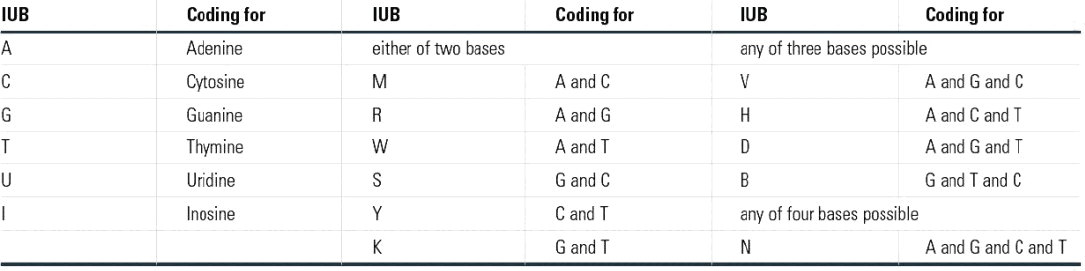
The IUB degeneracy code table again: the single letters that stand for two, three or four bases.

Reassemble the sequence with degenerate sequences for -35 and -10

-35 libYTKAYR -10 libKAYWRT LibraryGTACCTAGCCTACGACGAGTCGTGAYTKAYRTCTGGCCGATCCCAGCCKAYWRTCTGTCCaTGAGGTGAGACTTCCCCTTC

What is the theoretical diversity of this library? How many do I need to screen to have observed 99%?

Y   T   K   A   Y   R   K   A   Y   W   R   T
2 * 1 * 2 * 2 * 1 * 2 * 2 * 1 * 2 * 2 * 2 * 1   =2^8 = 256
Screen 256 * 4.6 = 1178 colonies

Plib overview

(go through labsheet)

https://docs.google.com/spreadsheets/d/15423iKeYZLnmwzpUZ2D4Q5brP2FLdhdbQyuIkiQEYVs/edit?usp=sharing